Three Stories That Remind Us Why We Teach

By the time winter break arrives, many educators aren’t just tired, but they’re carrying things. Heavy decisions. Hard conversations. Students we can’t stop worrying about, colleagues we want to reach but don’t quite know how.

This season invites rest, but it also invites remembering.

Stories matter because they reconnect us to purpose without pretending the work is easy. They remind us that meaning is often found not in the outcomes we measure, but in the people we continue to show up for. Here are three stories that continue to remind me why teaching and leading in schools still matter deeply, even in the hardest seasons.

Story One: “Every Kid Needs a Champion”

Years ago, I watched Rita Pierson deliver her now-iconic TED Talk, Every Kid Needs a Champion. I’ve revisited it many times since, and it still tugs at my heart.

Her message wasn’t about instructional strategies or school improvement plans. It was about belief. About adults choosing to stand in the gap for students, even when those students push back, shut down, or test every boundary. Her talk reminded me of a student I met in his freshman year of high school.

About twenty-three years ago, a young man stopped by my office and was pretty distraught. I was his ninth-grade Global Studies teacher, and then I became his assistant principal. I had a strong relationship with him and his family. His mom also called me to let me know he might stop by because “things are pretty bad.” So, I wasn’t surprised by his visit, but I was surprised by what he shared.

He was done: done with school, done with home, done with everything. We talked for about half an hour, and he seemed to feel better, but when he left my office, he didn’t return to class; he left the building…

I called his mom to let her know how our conversation went, and she told me she’d let me know if he shows up. A few minutes later, she called to let me know he was home.

Thankfully, he returned to school the next day and finished the year. Before summer break, he gave me a handwritten note thanking me for taking the time to listen. In that note, he shared that he had considered harming himself and that our conversation helped him see things just a little differently.

Stories like this remind me that we may never fully understand the impact of a single conversation, but students remember who showed up when it mattered most.

Years later, on April 6, 2024, I ran into his parents at Home Depot. They shared incredible news: their son was thriving and nearly finished with his doctoral studies. We shared a long hug and a few tears!

Story Two: The Student Who Didn’t Give Up

A couple of years ago, I watched a student in one of our Career-Technical Education programs struggle academically, behaviorally, and emotionally. The CTE lab instructor tried everything to help this young man: tough love, coaching, peer mentoring, parental involvement, you name it. To say he was frustrated with this student is an understatement.

However, instead of labeling the student, he chose persistence.

He didn’t lower expectations; he increased support. He created notecards to help him learn parts. He asked the student to come to the lab during study hall for additional help. He allowed a couple of test retakes after some further review sessions, and he partnered with an Intervention Specialist to learn about other accommodations.

The young man drove a beater of a car that needed a lot of work. The instructor helped him fix his car, which reinforced the skills he was trying to teach him, and he helped him land a job in his chosen industry. Months later, he graduated from his school and earned an industry credential, which helped him get a promotion.

What stood out most wasn’t just the outcome, but the educator’s refusal to separate skill-building from dignity.

Story Three: Choosing Connection When Convenience Would Be Easier

This story isn’t about students, it’s about adults.

One of my executive team leaders consistently chooses conversation over avoidance, growth over comfort, and trust over tension. Whether addressing curriculum concerns, procedural challenges, or personnel issues, her approach is steady: listen to learn, seek the back story, and collaborate toward solutions.

When she first arrived in our district, she heard many negative comments about our application process, which was pretty new. Since it fell under her supervision, she met with those who had concerns, met with members of our Business Advisory Council, and gathered feedback from our building leaders. After months of information gathering, we created a new application process that was much more widely accepted and, most importantly, better for students.

Because of her approach, difficult conversations that could have fractured trust instead became opportunities for alignment and growth.

As you head into break, give yourself permission to rest. Disconnect where you can. Refill what the semester has drained. When you return, recommit to one student or one colleague you’ve been struggling to reach.

Rest now. Then carry one name with you, and begin again.

Wishing you and your family a Merry Christmas, Happy Holidays, and a Happy New Year.

Be Great,

Dwight
How’s Your Emotional Hygiene?

Yesterday afternoon, I facilitated a session for our lead mentor educators and their mentees about mental health awareness; however, instead of calling it that, I started with a question: “How is your emotional hygiene?” That raised some eyebrows!

We’ve all heard it before: “Educator mental health matters.” The message has been repeated so often that it’s become background noise in our profession. Yet educators continue to report higher levels of job-related stress than the general workforce, with 23% of teachers considering leaving the profession in the 2022–2023 school year, citing stress and workload as significant factors, according to RAND Research.

It’s time to reframe this conversation. Instead of talking about mental health as an abstract concept, let’s talk about emotional hygiene.

Over 100 years ago, people started practicing personal hygiene, and life expectancy rose by 50%. We brush our teeth, wash our hands, and shower daily, not because we’re in crisis, but because we understand these practices prevent problems and maintain our physical health.

What if we approached our mental health the same way? According to the World Health Organization, mental health is a state of well-being in which an individual realizes their own abilities, copes with the everyday stresses of life, works productively, and contributes to their community.

Just as we don’t wait until our teeth are rotting to start brushing, we shouldn’t wait until we’re burned out to practice emotional hygiene. To be clear: these practices are about prevention and maintenance, not treatment of severe mental health conditions that require professional support.

Yes, we need systemic changes: better pay, funding, reasonable workloads, support, equity, and access. But we can’t wait for those changes to take care of ourselves. While we continue advocating for structural improvements, we can implement strategies that help us thrive within current realities.

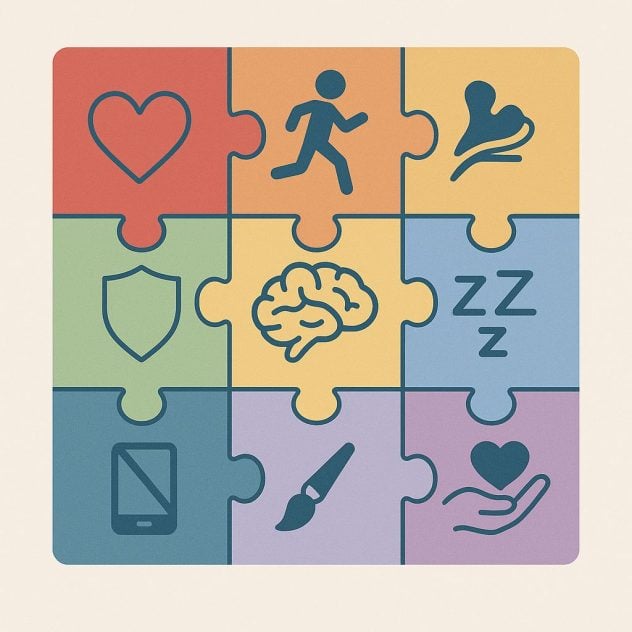
There are some practices we can do that are entirely within our control, and each creates measurable changes in brain chemistry and function. The science is solid, but what matters most is consistent practice. Here are practical strategies you can implement immediately, and remember to choose what works for your context. Think of these not as additions to your already full plate, but as replacements for less effective coping strategies:

1. Practice Gratitude

Research shows gratitude practices rewire our brains to notice positive experiences more readily. You can start with three specific things you’re grateful for each day, and be concrete rather than general.

2. Engage in Physical Activity

Exercise releases endorphins and reduces cortisol levels, literally changing your brain chemistry. You don’t need a gym membership: take the stairs, park farther away, or do jumping jacks or lunges during your prep period or break. Even 10-20 minutes makes a measurable difference. Yesterday, one mentor shared that she started walking right after school, while others mentioned daily walks with their dogs. Other mentions include cycling, rock climbing, yoga, and Orange Theory. The responses were as diverse as the group! The key is that each person found what works for them.

3. Journal Regularly

Writing helps process emotions and reduces rumination. Try a simple format:
*What went well today?
*What was challenging?
*What will I do differently tomorrow?
The act of putting thoughts on paper helps your brain organize and release them. I notice a difference in how I feel after I write versus typing.

4. Create Something

Creative activities activate different neural pathways and provide a sense of accomplishment outside work pressures. Whether it’s cooking, drawing, music, or crafting, creation gives your mind a restorative break from problem-solving mode. During our session, participants mentioned everything from shooting pool for 20-30 minutes a day, woodworking, pottery, and knitting, to one who recently published a book! It was exciting to hear so many creative outlets!

5. Prioritize Sleep

Sleep deprivation impairs emotional regulation and decision-making, both of which educators need most. Aim for 7-9 hours and create a consistent bedtime routine. Your students and colleagues deserve a well-rested educator, but more importantly, you deserve quality rest.

6. Do Good for Others

Acts of kindness release oxytocin and create positive social connections. It doesn’t mean taking on more work; it could be as simple as bringing a colleague coffee or sending an encouraging text to a friend.

7. Maintain Healthy Boundaries

Boundaries aren’t selfish; they’re necessary for sustainability. Practice saying, “I need to think about that” instead of saying yes right away. Protect your time as you would your resources and supplies, because both are finite.

8. Reduce Social Media Usage

Excessive social media use correlates with increased anxiety and depression. Try designated phone-free times, especially before bed and first thing in the morning. Replace scrolling time with one of the other emotional hygiene practices, and you’ll likely find you have more time than you thought. One of the mentees mentioned how she changed her phone screen to a pink scale, which reduces her desire to click on specific apps, and that she set up a “do not disturb” block during work hours.

You might be thinking, “These seem obvious.” You’re right, but common sense isn’t always common practice. The research shows that consistency matters more than complexity, and small, regular actions create lasting change.

Remember, positive relationships with students and colleagues are cited as protective factors against burnout. You don’t have to practice emotional hygiene alone. Share these strategies with your team, try them together, and support each other’s efforts. While these strategies help all educators, we also recognize that some face additional stressors that require both individual resilience and systemic support.

Start small. Pick one or two strategies that resonate with you and commit to them for two weeks. Just as you wouldn’t skip brushing your teeth because you’re busy, don’t skip your emotional hygiene because your day is packed. Our profession will always have challenges, but we can control how we care for ourselves amid them. It’s time to make emotional hygiene as routine and non-negotiable as washing our hands.

Your mental health isn’t a luxury; it’s a professional necessity. And, as with all good hygiene practices, consistency matters more than perfection. If you’d like a copy of the slide deck, email me, and I’ll send it within 24 hours!

Be GREAT,

Dwight

Three Ways to Talk About Representation Without Losing Your Audience

After my post in October, The Power of Representation: Why CTE Needs More Black Male Leaders, several colleagues reached out with a question:
“How do we talk about representation in our current political and cultural climate?”

It’s a fair question, and a necessary one. Representation is an important conversation, but how we talk about it often determines whether people lean in or tune out.

If we want to create schools and workplaces where everyone feels seen, valued, and supported, we must engage hearts before habits. Here are three strategies to help you keep the conversation productive and inclusive.

Start With Shared Values, Not Statistics
When conversations begin with data or disparities, some listeners feel defensive or fatigued before they even hear the heart of the message. Instead, start by grounding the discussion in shared goals: trust, belonging, and student success. Respond with something like, “We all want students to feel seen and supported. Representation is one of the ways we help make that happen.”

This reframing moves the focus from difference to connection. It helps colleagues see that talking about representation isn’t a political issue, but a professional one rooted in care and belonging.

In my district, we’ve had several cohorts over the last few years to discuss this topic and related topics, which have fostered greater understanding, openness, and a change in mindset among some participants.

Use Stories That Humanize, Not Generalize
Stories build bridges faster than statistics. Sharing a real moment, like when a student said, “I’ve never had a teacher who looks like me before,” or when you noticed a colleague light up after being recognized, reminds people that representation is personal, not theoretical. Human stories invite empathy and lower defenses. They transform abstract ideas into human impact. Representation isn’t about who’s in charge, it’s about what students see as possible.

Extend Curiosity Instead of Correction
When someone says, “I don’t see color,” resist the urge to correct immediately. Instead, get curious: “That’s interesting, can you tell me what that means to you?”
That question opens a door instead of closing one. Most people mean they value fairness or equality. You can affirm that intention and gently expand it:

“I love that you want all students treated fairly. I’ve found that recognizing our differences actually helps us do that more effectively.”

Curiosity communicates respect. It keeps dialogue alive long enough for reflection and growth to happen.

Final Thought and Challenge
Representation conversations don’t have to divide, but they can deepen understanding when led with empathy, clarity, and courage. We can’t change minds by silencing voices. We change them by listening, connecting, and telling better stories.

This month, talk with one colleague about why representation matters, and focus on what you both value for your students. Because progress begins with one respectful, honest conversation at a time.

Be Great,

Dwight

The Power of Representation: Why CTE Needs More Black Male Leaders

Black male educators represent just 1.3% of all educators nationwide, according to 2023 data from USAFacts. In Career-Tech Education (CTE), that number is even smaller. When students walk into our schools and labs, they’re not just learning skills; they’re looking for reflections of what’s possible. Representation matters, especially in CTE, where pathways to meaningful careers are being defined every day. Yet, too often, our leadership ranks don’t mirror the diversity of our classrooms.

As a Black male leader new in CTE, I’ve seen firsthand how visibility changes the conversation. When young men and women of color see someone who looks like them leading, teaching, or advocating, it reshapes what they believe is achievable. It says, “You belong here, and you can lead too.”

Representation isn’t just about optics; it’s about outcomes. Diverse leadership broadens perspective, builds trust, and drives innovation. It creates psychologically safe spaces for students and staff to bring their authentic selves to work and learning. When leadership teams reflect the communities they serve, students experience a stronger sense of belonging, and belonging fuels engagement, effort, and success.

Seeing and valuing diversity isn’t about division; it’s about ensuring every student feels visible, supported, and valued. That’s what all great educators want; for every learner to know they belong and can thrive. Representation strengthens culture the same way good instruction strengthens learning, it meets people where they are. The impact goes beyond students. Representation among educators and administrators influences hiring, curriculum design, disciplinary practices, and professional culture. It ensures more voices are at the table when decisions are made about equity, access, and opportunity.

I’ve attended local, state, and national education conferences for decades, and one of the first things I do is look for people who look like me. And when we make eye contact from across the room, we acknowledge one another with a head nod, and if we’re in proximity, we shake hands and introduce ourselves. This happens because representation is so rare. I became a CTE educator in 2019–2020 and started attending CTE-specific conferences. The representation is even less than at comprehensive education conferences. I often wonder why, and, more importantly, how we can expand representation in CTE leadership, not only in Ohio but nationwide.

Before we can expand representation, we must acknowledge the systemic obstacles that keep Black males from entering or advancing in CTE leadership. These include limited advancement pathways from industry to education, salary gaps that make leadership positions less attractive than industry roles, and workplace cultures that may feel unwelcoming or unsupportive. Additionally, factors such as socioeconomic background, geographic location, or being a first-generation college graduate can compound these barriers, making the path to leadership even more challenging.

So, how do we expand representation in CTE leadership?

Mentor and Sponsor Future Leaders
Leadership doesn’t happen by accident; it’s cultivated through support and exposure. I am thankful for the many mentors I encountered throughout my career who recognized my leadership potential and began guiding me toward formal leadership positions. Identify emerging educators of color and intentionally mentor them into leadership pathways.

Challenge the Narrative
Too often, we view CTE through a narrow lens as a “second choice” rather than a first opportunity. However, this lens has widened considerably over the last decade. As more diverse leaders step into these spaces, the story of CTE changes. Representation isn’t about who’s in charge, it’s about what students see as possible.

Recruit Beyond Comfort Zones
Seek candidates through affinity networks, historically Black colleges and universities (HBCUs), and community organizations. There is a rich history of CTE at HBCUs. Representation starts with intentional recruitment. Engage parents, community leaders, and industry partners as ambassadors who can help identify and encourage potential leaders.

Create Visible Leadership Moments
Representation isn’t only positional; it’s relational. Provide opportunities for staff and students of color to lead meetings, present at conferences, and represent their programs publicly.

Model Inclusive Leadership Daily
Representation alone isn’t enough. It must be paired with practices that honor every voice and perspective. Authenticity builds trust; trust builds culture.

Track Progress Meaningfully
Establish concrete metrics to measure success: track leadership pipeline development, monitor retention rates of educators of color, and survey staff about their sense of belonging. What gets measured gets improved.

Representation isn’t about filling quotas, it’s about fulfilling potential. Nor is it exclusionary. Because opportunities are open to Black male educators, it doesn’t mean those same opportunities are closed to others. It simply means expanding the candidate pool to be intentionally inclusive, something that historically has not been the case. Every student deserves to see themselves in the leaders guiding their education. Every educator deserves to feel they belong in the spaces where decisions are made.

When we make room for more Black male leaders in CTE, we don’t just diversify leadership, we expand what’s possible for everyone.

Who around you needs to see you lead, and who needs you to help them step forward next?

And one more reflection to consider:
Think about a time when you saw someone succeed who reminded you of yourself. What did that moment tell you about possibility?

Be Great,

Dwight

Leading Through Loss and Uncertainty

In education, uncertainty has become the norm, with budget cuts, shifting expectations, and community pressures. Loss is real: of staff, resources, and sometimes even trust. For leaders, these seasons can feel overwhelming. By leader, I’m not only referring to positional leaders, but also to any adult who serves students and/or staff, regardless of position or title.

But here’s what I’ve learned about navigating these challenges: the measure of leadership isn’t avoiding uncertainty; it’s choosing how to respond in the midst of it. When we can’t control circumstances, we can control our presence. There are many opportunities for leadership to rise to the occasion. During one of my most challenging years as a principal, we had to inform twenty-five people in my building that they would be laid off at the end of the year, but we had to do so mid-year. Morale sank. Students felt the tension. Parents wondered what was happening. Uncertainty, insecurity, and survivor’s remorse impacted culture and climate.

I wanted to fix everything, but I couldn’t. Instead, I focused on what was still in my hands: how I showed up each day. I made it a point to be visible in classrooms, share gratitude notes, and listen to staff concerns without rushing to solve them all. Over time, the mood shifted. We acknowledged the reality of the situation. We didn’t erase the loss, but we regained trust and steadiness. I won’t pretend this was easy or that I had extra time. Most days, I was stretched thin like everyone else. But small, intentional actions, even two-minute hallway check-ins, made a difference.

As I reflect on that experience, I think about the steps we took to provide stability and regain trust. We weren’t perfect; we made mistakes, but we acted with intention. As I share the strategies we implemented, consider what you’ve done and experienced, and what you would do differently.

We focused on showing up steady. Even when we didn’t have the answers, we did our best to remain a calm presence by communicating clearly, listening empathetically, and managing our emotions. It wasn’t until summer that we were able to address the toll managing others’ emotions took on us. When we showed up steady, we could be an anchor in rocky waters.

Beyond showing up steady, name the loss honestly. Avoiding the truth erodes trust; acknowledging it builds it. I remember one of my veteran teachers stopped by to chat after school and provided some sage advice. She said she understood what I was trying to do, but it wasn’t landing because some felt I was ignoring the reality of job loss. She encouraged me to honestly acknowledge the reality and let people lean into their grief. Great advice.

While acknowledging difficulty, it is crucial to celebrate resilience. Point out examples of staff and students adapting with courage. We carved out just five minutes at staff meetings for shout-outs, including verbal praise, written praise, and whole-staff recognition. Sometimes it was the only positive moment in a tough week.

Finally, in the midst of all the uncertainty, remind people what remains unchanged. The one thing that is certain during uncertainty is change, so it’s essential to communicate and remind others what things remain the same: which classes people will teach, the schedule, job responsibilities, your vision and mission, for example.

As you think about what you’ve experienced, how do you want your staff, colleagues, and students to experience your leadership during uncertain times?

Be GREAT,

Dwight

Prior Planning…

My high school football coach always said, “Prior planning prevents poor performance.” Planning, however, was only part of the process. The other part was execution. Needless to say, we rarely got the results we wanted (we lost a lot!).

But Coach Hudson was still a great coach and an even better mentor. His lesson stuck with me: preparation matters, but you also have to adapt when the game doesn’t go your way.

Even with the best-laid plans, leaders today must be adaptable and responsive in a world that is volatile, uncertain, complex, and ambiguous. Continue to plan for the type of classroom, school, district, or life you want to build, because failure to plan almost always leads to poor performance.

If you’ve ever felt like you’re driving in circles without a plan, Clark Griswold’s famous European Vacation roundabout scene captures it perfectly. Without a clear plan and the courage to act, we risk going nowhere, frustrated and exhausted.

This week, think about what you want to accomplish and the moments you want to create. Then, work out your plan by asking yourself:

What resources do I need?
Who needs to be included?
What’s my timeline?
How will I check progress?
Do I have the skills to execute, or do I need to collaborate with others?
What am I missing?

At the same time, don’t let overthinking paralyze you. Planning is critical, but endless planning can be just as damaging as not planning at all. Trust yourself. Get started. Adapt as you go.

Reflection: What’s one plan you need to move from draft to action this week?

Be Great,

Dwight

Beyond the Politics: Why SEL and Employability Skills Are Essential in Every Classroom

Social Emotional Learning (SEL) took center stage during and shortly after the pandemic because students, staff, families, and the community faced mental, emotional, and, in some cases, physical challenges. Recovering from the harshness of the pandemic proved difficult for many, prompting school leaders, educators, and mental health specialists to concentrate on strategies to enhance SEL at every grade level. As fatigue set in and frustration grew, SEL became a politicized term. Some viewed it as a catch-all for non-academic issues and found it deeply offensive. However, there was a misunderstanding.
"AI-generated image created by ChatGPT using DALL·E, March 2025."

At its core, SEL is the AFFECT of schooling: teaching and modeling self-awareness, self-management, responsible decision-making, social awareness, and social management or relationship skills. The terminology became a part of the mainstream lexicon, but the practices have been around for centuries. From fables, tales, and stories, we’ve learned SEL in our homes, classrooms, places of worship, social gatherings, and extra-curricular activities. Amid the politicizing of the term, skepticism increased, and educators either abandoned or quietly integrated these strategies in the classroom.

As SEL faced scrutiny, another familiar concept—employability skills—emerged in discussions about workforce readiness. Despite the different labels, both frameworks emphasize the same core competencies needed for success in school and beyond. While this terminology is not new, it has taken on a new meaning. Our nation has confronted job shortages due to retirements and the booming of new industries during the Information and Technology Age.

While SEL and Employability Skills are similar, some differences must be stated. Employability Skills focus on specific skill development, such as time management, adaptability, and technical skills. SEL emphasizes emotional intelligence, self-regulation, and interpersonal skills.

Including both skills in the teaching, learning, and leading process is essential so that every student acquires a key set of abilities to help them thrive as adults. Here are three ways to integrate SEL and employability skills into each classroom.

1. According to the Collaborative for Academic and Social Emotional Learning (CASEL), SEL improves students’ academic performance by 11 percentage points. It’s not a waste of time but a valuable use of time because it creates the conditions for deeper learning. To teach SEL skills such as self-awareness and self-management, incorporate reflective journaling, exit tickets, or self-assessment tools after short—and long-term assignments.

2. Teachers can design group projects to teach social awareness and relationship skills. These projects involve students collaborating and navigating different viewpoints, fostering teamwork and empathy. To help students practice, use video clips from movies, sitcoms, or streamed shows with multiple perspectives and ask students to analyze what’s happening.

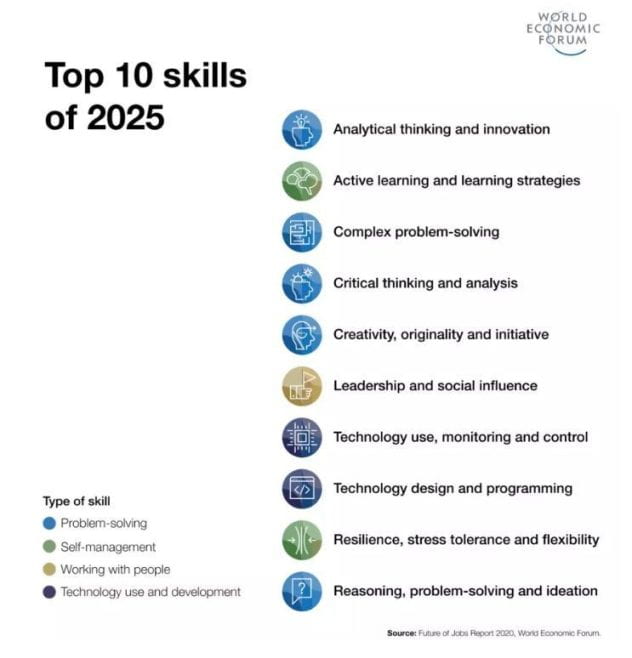
3. The World Economic Forum’s Future of Jobs Report highlights problem-solving and teamwork as top skills for 2025.

Additionally, last spring, during my district’s annual Continuous Improvement Plan (CIP) meeting with business advisory members, employers, and educators from our associate schools, they reinforced the need for these essential skills based on their experiences. To teach responsible teamwork, communication, and decision-making, teachers can introduce scenario-based learning or inquiry-based tasks in which students weigh options and choose the best course of action.

Whether we call them SEL or Employability Skills is simply a matter of semantics. What truly matters is that we continue to teach and reinforce these essential skills in every classroom. These abilities—self-awareness, collaboration, and responsible decision-making—are the foundation for academic and lifelong success.
As educators, we have the opportunity to integrate these skills seamlessly into daily instruction. Administrators can model how to do this during staff or department meetings and share supporting resources. Through reflection, collaboration, and real-world problem-solving, we can ensure that students leave our classrooms academically prepared and truly life-ready. Let’s commit to prioritizing these skills so every student can thrive in an ever-changing world.

Be Great,

Dwight

The Three Most Underrated Skills Students Need to Succeed

Students today, Gen Z (born between 1997 and 2012) and Gen Alpha (born between 2010 and 2024), face more challenges than most generations before them because of the advent of the smartphone, 24/7 accessibility, an overabundance of choice, a disruptive job market, and having to overcome a global pandemic. On the other hand, they have many opportunities to create and define their pathway to success. They have more entrepreneurial access and opportunities, most adults have embraced them delaying or forgoing a traditional college education to explore trade schools or go directly into the workforce, and they have the freedom to move from one interest to another without judgment (for the most part).


In navigating these challenges and opportunities, students must rely on a set of foundational skills. Among them, literacy remains the most crucial, mainly because literacy creates a strong foundation for everything else. The ability to read, write, think critically, and communicate effectively will continue to open doors for those with this solid foundation.

However, literacy alone is not enough. To thrive in today’s world, students need a broader skill set that enables them to navigate uncertainty and change. As you think about the skills you possess to do your job effectively, you’d have to admit that you did not have these skills as a 15-18-year-old high school student, at least, not at the current level. Am I right?

With that in mind, let’s explore three underrated but essential skills that students need to build for success in a volatile, uncertain, complex, and ambiguous (VUCA) world, starting with adaptability.

AdaptabilityThe quality of being able to adjust to new conditions. We cling to certainty, which is why we need routines. However, we must also help students build their adaptability muscle by having them work through scenarios, sharing stories of how others have successfully adapted during change, and reminding them that it’s a part of life. In football, when the offense fumbles the ball or throws an interception, it’s called a sudden change, and both teams need to respond accordingly. The team that can respond effectively usually wins the game. Creating the conditions for students to adapt to sudden change will help them build that skill in a safe environment where they can get feedback without penalty.

Emotional IntelligenceThe ability to understand and manage your own emotions, as well as the emotions of others. Strengthening one’s emotional intelligence is a life-long process. This is an essential skill because the higher the stress, the less likely one can control emotions/reactions. During uncertain and ambiguous situations, the ability to control and understand others’ emotions can pave the way for successful relationships and opportunities. The following are a few ways to help students strengthen their emotional intelligence:
Integrate social-emotional learning (SEL) strategies in the classroom or meetings. For example, model centering activities allow students to think critically about their mindset, communicate with a peer, and practice active listening.

* Teach conflict resolution through scenarios, current events, history, or literature. Guide students through the process by establishing norms for conflict resolution and having students identify them through the content.

* Establish a positive school and classroom culture by creating shared norms, values, and traditions that foster an emotionally safe environment. Adults model expected behavior, so the best way to strengthen culture is to focus on adult behavior.

* Teach students how to express gratitude because it leads to more happiness, and happier people tend to have positive feelings about themselves and others, are more optimistic and relaxed, less envious, and create more positive memories.

Self-Discipline– While adaptability and emotional intelligence help students navigate change and relationships, self-discipline is the key to following through on their goals. Self-discipline is the ability to control one’s thoughts, emotions, and actions to achieve one’s goals. Assign short-term and long-term projects to help students set goals and to meet benchmarks. Setting aside time to meet with them one-on-one can provide much needed feedback on their progress, and strengthen this important skill.

The world isn’t slowing down, and the challenges students face will only keep evolving. That’s why we must ensure they develop the skills to adapt, manage emotions, and stay disciplined in pursuit of their goals. If we focus on building adaptability, emotional intelligence, and self-discipline, we’re giving them the tools to handle uncertainty, seize opportunities, and create their own success. Let’s be intentional about helping students develop these underrated but essential skills—because their future depends on it.

Be Great,

Dwight

Motivating The Unmotivated

One of the hardest challenges we face as educators is working with someone who isn’t motivated. I bet someone popped into your mind the moment you read the title of this post.

What makes motivating an unmotivated person so challenging? During our professional learning day last week, I heard, read it in the virtual chat, and talked to a few people about this topic, and it’s a significant point of frustration. I know many of you can relate to this. So, I’ve been thinking about this quite a bit as I am experiencing an unmotivated child at home. Well, she’s intrinsically motivated when she’s interested!

Let’s start with how we define motivation: the general desire or willingness of someone to do something. So, if motivation is about one’s will, how do we help ignite that spark without forcing it? The truth is we can’t motivate someone, but we can create the right conditions to inspire it. We can coax, threaten, bribe, beg, or lecture, but these strategies may breed short-lived results. My wife and I continue to try new things and have found that we have to keep the ideas fresh by making connections between my daughter’s interests (at the time) and the homework or other tasks she needs to complete. What makes this even more challenging is that, like many of you, my wife and I are intrinsically motivated—and always have been—so it’s hard to understand why others aren’t. This lack of understanding can lead to judgment, frustration, and apathy.

If you are in the same boat, Here are a few practical strategies that have worked for my family and may be helpful in your classroom:

Set Clear Goals– Set clear, attainable goals so they can experience success. However, it’s important to note that setting these goals can be a challenge, as they need to be both challenging and achievable. Maintain high expectations but break them into manageable steps to help students experience success.

Give Responsibilities– Making students responsible for tasks that help the classroom or lab function better increases the likelihood of them understanding what it feels like to be motivated from within. Be sure the responsibilities aren’t punishments but add value to others, including those responsible. For example, assigning a student to organize materials or lead a warm-up activity can foster a sense of ownership.

Make Learning Relatable– Learn about your students’ interests—what they’re reading, watching, listening to, or doing outside of school—and connect that to the content. For instance, if a student is interested in sports, you can use sports statistics to teach math. If a student is a fan of a particular book series, you can use that series as a basis for a literature lesson. This might require adjusting how you deliver instruction, but the payoff is worth it.

My daughter’s interests change often, so we have to listen carefully during our conversations to learn how to connect them to upcoming tasks. For example, she loves listening to podcasts, which are about 15-20 minutes long. Over the weekend, I set a timer for 20 minutes for her to complete an assignment and gave her a five-minute break. During the break, she challenged me to a game of Speed or Checkers. Once the break was over, she got back to work.

Positive Feedback– My daughter thrives on written and verbal praise. We’ve learned to highlight her effort, especially when she’s learning something new, to help her recognize the feeling of intrinsic motivation. Strive for balance—too much praise can lead to complacency, while excessive criticism can discourage progress.

Collaborative Learning– Learning is social. Providing opportunities for students to work together improves engagement and develops essential employability skills. What better way to strengthen collaboration than through group tasks and projects?

Motivating an unmotivated student isn’t about having the perfect strategy—it’s about trying, reflecting, and adjusting. This week, identify one unmotivated student and apply one strategy consistently for two weeks. Reflect on what works, what doesn’t, and what adjustments you can make. This process of reflection and adjustment is a powerful tool in your hands. Share your experience with a colleague—or better yet, with the whole team.

You don’t have to be an educator to try these strategies. If you, a family member or a colleague need a push, try one yourself, then celebrate the progress!

Be Great,

Dwight

Attitude in Action: Five Strategies to Shape Your Mindset

“Control the controllables.”-Viktor Frankl

I’ve thought about this quote often since the start of the 2025. With so much going on around us, we can get easily swept into an emotional tornado, flailing and hopelessly fighting to get out. However, that is a choice. It’s controllable.

We can control our attitude: how we show up and respond. In the first chapter of my book Be GREAT: Five Principles to Improve School Culture From the Inside Out, I wrote:

Our mindset determines how we respond to life. Our mindset determines how we engage with, and interact with others. Our mindset determines how we react to life. Our mindset determines our everything. Unfortunately, our feelings often hijack our mindset based on past experiences, unfulfilled dreams, heartache, disappointment, regret, fear, and my personal default feeling, frustration.

Educators face what feels like insurmountable challenges; however, we have successes and create wins every day! We just need to recognize them! So, how can we shift our mindset when challenges arise? Here are five strategies that can help reshape attitudes and impact actions:

Model Positive Attitudes Daily
Actions speak louder than words, so we can demonstrate a positive and growth-oriented attitude in the classroom. When challenges come up, model emotional control and a constructive response. “More is caught than taught.” By controlling our emotions, we can create a culture that teaches students that their mindset is a choice they can control.

Encourage Reflective Practices
Reflection is the heart of our practice, and we reflect throughout the day. To move reflection to action, incorporate journaling, group discussions, blogging, podcasting, or vlogging to make the learning visible and action-oriented. Reflect on questions like, “How did my attitude impact my behavior or decisions?”

Teach How to Understand and Manage Emotions
Develop and model strategies, such as mindfulness exercises and stress-relief techniques, to assist others in managing their emotions. Emotional regulation is a skill that must be sharpened daily. It begins with awareness of why and how we respond the way we do. This helps prevent negative feelings from overwhelming one’s mindset. Slow down, fix one’s face, remain calm, and respond according to the situation. Again, control the controllable.

Create Space for Goal-Setting and Prioritization
Help students and staff identify clear goals and prioritize their tasks while maintaining an attitude of flexibility. Encourage them to revisit these goals daily to ensure their focus remains on personal growth rather than being overwhelmed by to-do lists. More importantly, share your goals with them and allow time for them to reflect on their progress with each other, which will create a culture of accountability.

Celebrate Effort Over Outcome
Shift the focus from performance-based results to participation and effort. No, I’m not saying everyone gets a participation trophy. However, I acknowledge that recognizing and rewarding the mindset and behaviors that lead to improvement, fostering a sense of accomplishment, and encouraging positive attitudes toward learning and challenges will garner positive results.

Maintaining a positive attitude doesn’t mean ignoring challenges; it means refusing to be controlled by negativity. What we focus on and think about is what we become. Which of these strategies resonates most with you? Pick one and commit to applying it this week. Share it with a colleague and hold each other accountable for a mindset shift.

Be Great,

Dwight